
Meta description: Learn how the internet works in plain language. Discover the basics of servers, browsers, IP addresses, and data packets in this beginner-friendly guide.
What is the internet?
The internet is a global network of computers that communicate using standardized rules called protocols. It lets you browse websites, send emails, stream videos, and connect with people worldwide.
Key components of the internet
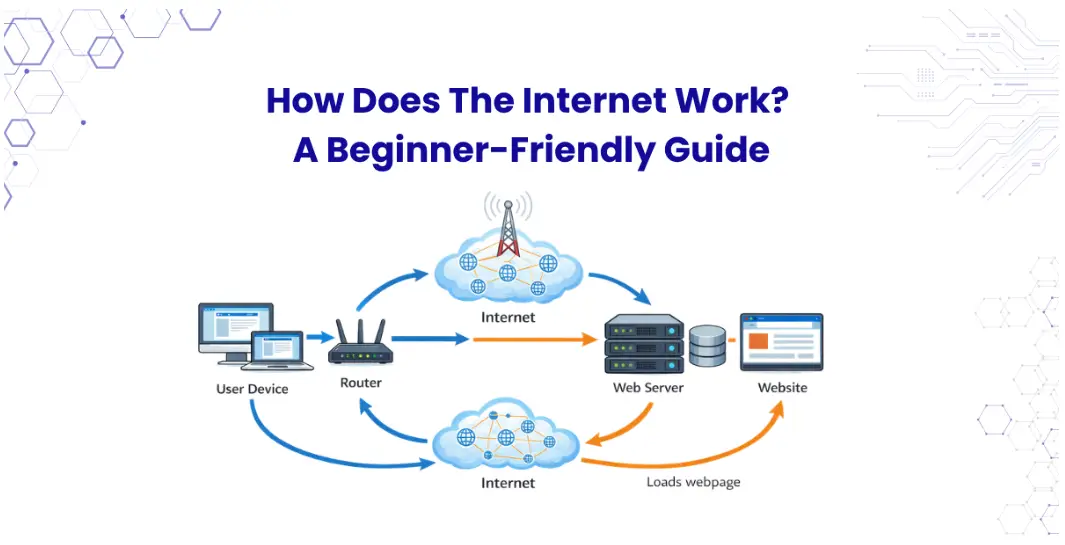
- Servers and clients: Servers store websites and data. Your device (phone, laptop) is the client that requests this data.
- IP addresses: Every device online has a unique IP address, like a digital home address.
- Routers and switches: These direct data traffic between devices and networks.
- Data packets: Information travels in small chunks called packets, which are reassembled at the destination.
How your browser loads a website
- You type a URL (e.g.,
www.example.com) into your browser. - Your device asks a DNS server to translate that URL into an IP address.
- Your request travels through routers to the website’s server.
- The server sends back data in packets.
- Your browser rebuilds the packets into a visible webpage.
Why understanding the internet matters
Knowing how the internet works helps you troubleshoot connection issues, protect your privacy, and make smarter choices about online tools and services.